Agentic AI Blueprint: Launch High-Impact Automation Pilots in 30 Days
A step-by-step framework to ship your first agentic AI pilot, prove value fast, and scale automation responsibly across the org.

Agentic AI is no longer a moonshot. It is the backbone of teams who want to scale without burning out their people. Over the past year we have helped operations, customer success, and revenue teams roll out agentic workflows that remove entire layers of manual work. This blueprint distills the most successful pilots into a focused 30-day play.
Why Start With an Agentic Pilot?
- De-risk the investment: Starting small keeps stakeholder commitment manageable while surfacing integration challenges early.
- Create a showcase: A successful pilot becomes the story that secures funding for bigger automation waves.
- Build trust: Transparent measurement and iteration convert skeptics into champions across the business.
“We shipped our first automations in < 3 weeks and instantly saved 40+ hours of manual QA checks.” · AI Operations Lead, SaaS Scaleup
The 30-Day Launch Timeline
Week 1: Frame the Problem
- Map the current workflow and highlight human decision points.
- Capture baseline metrics (volume, cycle time, escalations).
- Identify the data sources your AI agents will need.
Week 2: Assemble the Stack
- Select the primary orchestrator (n8n, Make, or custom orchestrator).
- Choose the model strategy (single LLM vs. specialist models with routing).
- Define guardrails: human-in-the-loop checkpoints, logging, and rollback plans.
Week 3: Ship v1
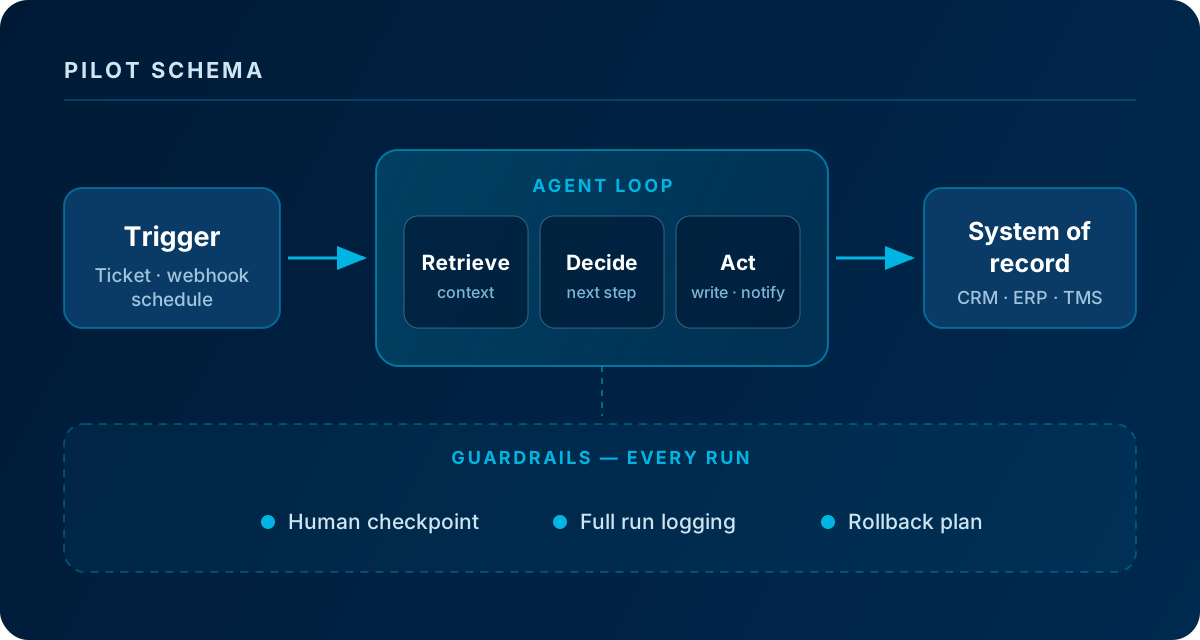
- Build a prototype workflow and run 5–10 shadow runs.
- Validate agent performance on edge cases and failure modes.
- Document every manual override; the insights feed the next iteration.
Week 4: Launch & Scale
- Roll out to a limited user group and collect qualitative feedback.
- Compare before/after metrics to quantify time saved and quality improvements.
- Capture learnings, create decision logs, and prepare a roadmap for phase two.
Signals You Are Ready to Scale
- You have a documented governance checklist for every new automation.
- Stakeholders know how to request new agentic workflows.
- Real-time dashboards expose performance and trigger alerts when quality dips.
Almost all of the friction in these thirty days is delivery friction rather than model choice, which is why we run pilots like this with a forward deployed engineer embedded in the team that owns the process. If you need the business case first, the automation ROI playbook covers the numbers; for the same loop in production, see order exception handling and agentic carrier sourcing.
What to Tackle Next
The blueprint is just the start. Most teams move forward with:
- Multi-agent collaboration (handoffs between specialists).
- Voice of customer analysis that feeds product and CS playbooks.
- Fully automated onboarding journeys tied to CRM data.
Hungry for a bespoke roadmap? Book a strategic workshop and we’ll co-design your next agentic milestone.
Sami Raza
Software Developer & Technical Author
Sami Raza builds AI automation for logistics, DTC, and construction operations teams at ApexifyLabs, and writes about the operational failures that automation is actually worth pointing at.