Why Brokerages Leave Detention Dollars on the Dock
Detention is one of the largest accessorial revenue lines in freight, but most brokerages leave a meaningful portion on the dock each week. Here is why.
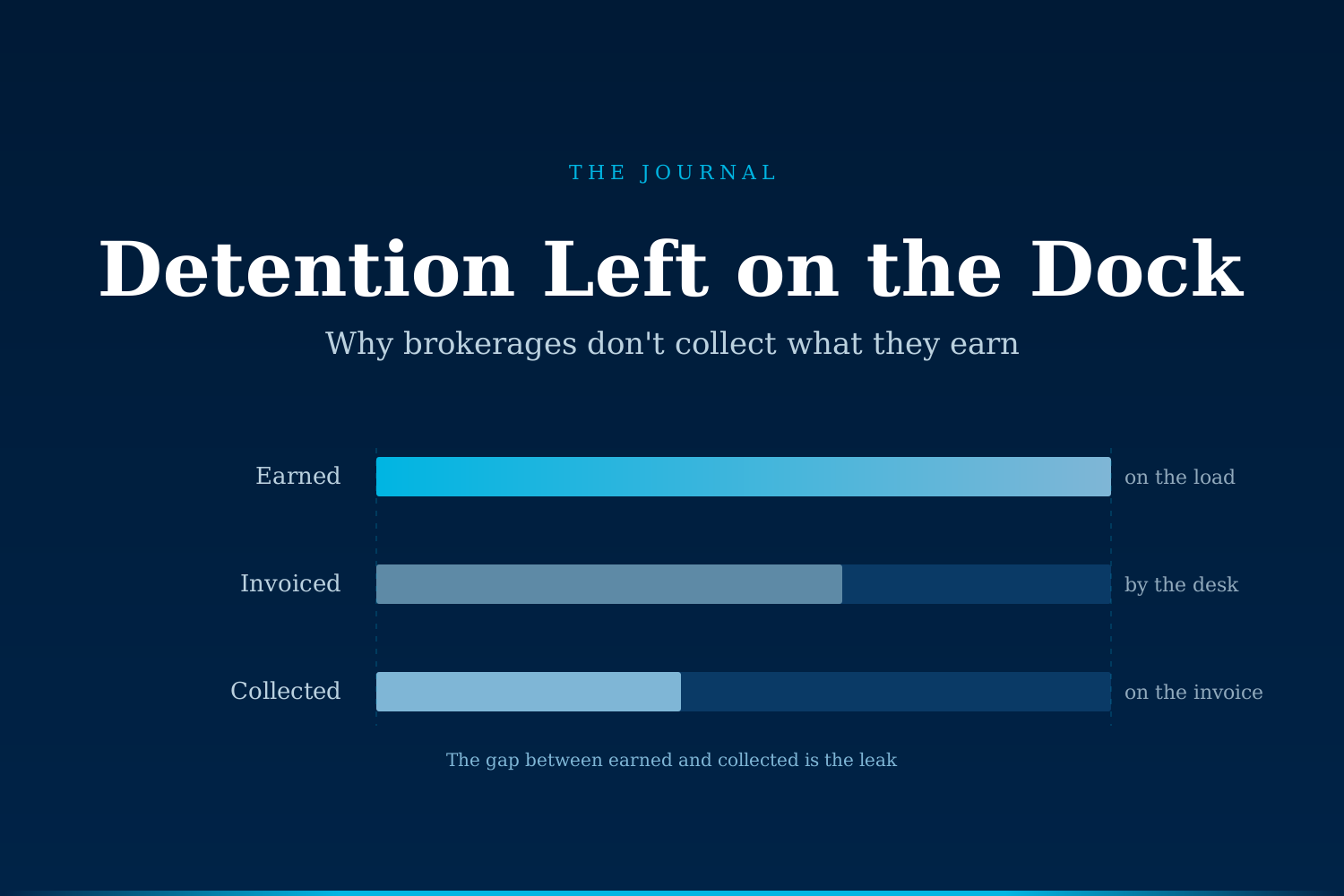
Detention is one of the largest accessorial revenue lines in freight, but most brokerages leave a meaningful portion of it on the dock each week. The cause is rarely pricing. It is documentation: missing timestamps, weak driver records, and shipper pushback that goes unchallenged. The revenue is earned; it just never lands on the invoice.
This article looks at why detention slips through the cracks on a brokerage desk, what an AI-assisted recovery process changes about the math, and three signals that a desk is leaving money on the dock.
What is detention, and why is it routinely under-billed?
Detention, sometimes called demurrage on the intermodal side, is the fee a shipper or receiver pays when a driver is held at a facility beyond the agreed free time. For truckload freight, free time is usually two hours; after that, the receiver typically owes $50 to $100 per hour, depending on lane, carrier, and contract terms.
The American Transportation Research Institute (ATRI) has reported for years that detention is one of the most consistently cited operational pain points among carriers, and that most drivers experience detention regularly. ATRI's research on driver hours and delays shows the time loss is real and measurable. The question for a brokerage is not whether detention happens. It is whether the brokerage collects on it when it does.
In practice, many brokerages bill detention only on the loads where the driver volunteers a clean timestamp record and the shipper does not push back. Everything else (loads with vague times, loads where the receiver disputes the in/out window, loads where nobody on the desk got around to filing the claim) simply goes uncollected.
Why does poor documentation kill detention recovery?
A detention claim only sticks when four times are documented and consistent: arrival at facility, time in, time out, and departure. If any one of these is missing or fuzzy, the receiver has a reason to challenge the bill, and most brokerages do not have the time or the leverage to fight a small disputed claim line by line.
Manual detention recovery depends on:
- The driver remembering to capture and send timestamps.
- The dispatcher pulling those timestamps into the load record.
- The accounts receivable team catching detention-eligible loads in time to invoice.
- Someone on the desk pushing back when the receiver says, "we don't pay detention on that lane."
Each handoff is a place where the claim can fall out of the workflow. Industry surveys of freight broker operations consistently find that a meaningful share of detention-eligible loads are never invoiced, and of the ones that are, a further share is written off when disputed. Most of those write-offs are not because the claim was wrong; they are because the desk did not have time to defend it.
How does manual detention billing compare to AI-assisted recovery?
The difference is less about technology than about consistency. Manual recovery is reactive and personality-dependent. AI-assisted recovery is systematic and runs whether the desk is busy or not.
| Step | Manual desk | AI-assisted desk |
|---|---|---|
| Timestamp capture | Driver text or call, sometimes missed | ELD and check-call data reconciled automatically |
| Detention-eligibility flag | Spotted ad hoc by a dispatcher | Flagged the moment the in/out window crosses the contract threshold |
| Claim documentation | Assembled by hand at month-end | Compiled in real time with supporting records |
| Dispute response | Often written off when pushback comes | Drafted response with cited timestamps and contract terms |
| Reporting | Hard to see what is being lost | Weekly view of detention earned vs invoiced vs collected |
The point is not that an AI workflow magically extracts cash. It is that the brokerage finally sees the full shape of what it is owed and chases the portion that is worth chasing. On the loads where the documentation is clean and the math is real, those claims now land on an invoice instead of being lost between the dispatcher's notebook and the AR aging report.
What changes when a brokerage stops leaking detention revenue?
A few things shift when detention is treated as a tracked, billable line item rather than a frustration.
The desk recovers margin without finding new freight. Detention is incremental revenue on loads the brokerage has already won and already moved. Recovering an additional portion of detention-earned dollars goes almost entirely to margin, because the cost of the load is already booked.
Carrier relationships improve. A real share of detention dollars flows back to the carrier. Brokerages that consistently bill and collect on detention can pay drivers what they are actually owed for sitting at a dock, which is one of the durable reasons carriers stay loyal to a broker. ATRI and other industry researchers have repeatedly pointed to detention pay as a meaningful factor in carrier satisfaction and retention.
Shipper conversations get sharper. When a brokerage walks into an annual review with a clean record of detention incidents and rates by facility, it has data the shipper cannot easily dismiss. That is often the difference between a renewal at flat rates and a renewal with a meaningful uplift, or with the worst-offending facilities moved to a different free-time window.
The desk stops carrying the cost emotionally. Detention disputes are some of the most demoralizing work in a brokerage. Knowing the claim will be defended with documentation, regardless of who is on the phone, takes a weight off the dispatcher and the AR team.
What are three signs your detention recovery may be leaking?
A quick self-check, useful even for a desk that never speaks to an automation partner:
- Your detention-billed dollars are flat from month to month. Detention volume fluctuates with lane mix, season, and shipper behavior. If the billed number does not move, it is more likely that the desk is billing only the easy claims, not that dock behavior is unusually stable.
- Your AR aging report does not separate detention from linehaul. If detention sits in the same bucket as the base rate, write-offs and disputes are invisible. A desk cannot manage what it cannot see at a line-item level.
- Your dispatchers cannot answer, "what was our detention-eligible volume last week?" If the answer requires a manual pull, the rest of the recovery process is almost certainly manual too.
If any one of these is true, the gap between detention earned and detention collected on the desk is probably wider than the team realizes. None of these signals require a software project to investigate; they only require pulling two reports and comparing them.
Want a second opinion on your detention recovery?
If the patterns above sound familiar, we run a completely free automation audit for freight brokerages that want to see, in numbers, how much detention is being earned versus invoiced versus collected on their own desk. No commitment, no slide deck, no pressure to move forward. → Book the audit
Sami Raza
Software Developer & Technical Author
Sami Raza builds AI automation for logistics, DTC, and construction operations teams at ApexifyLabs, and writes about the operational failures that automation is actually worth pointing at.