When Trade Buyout Overruns Erode GC Job Margin
Trade buyout begins when a GC signs a contract, and the bought price often drifts two to five percent past the estimate. That delta lands on GC fee.
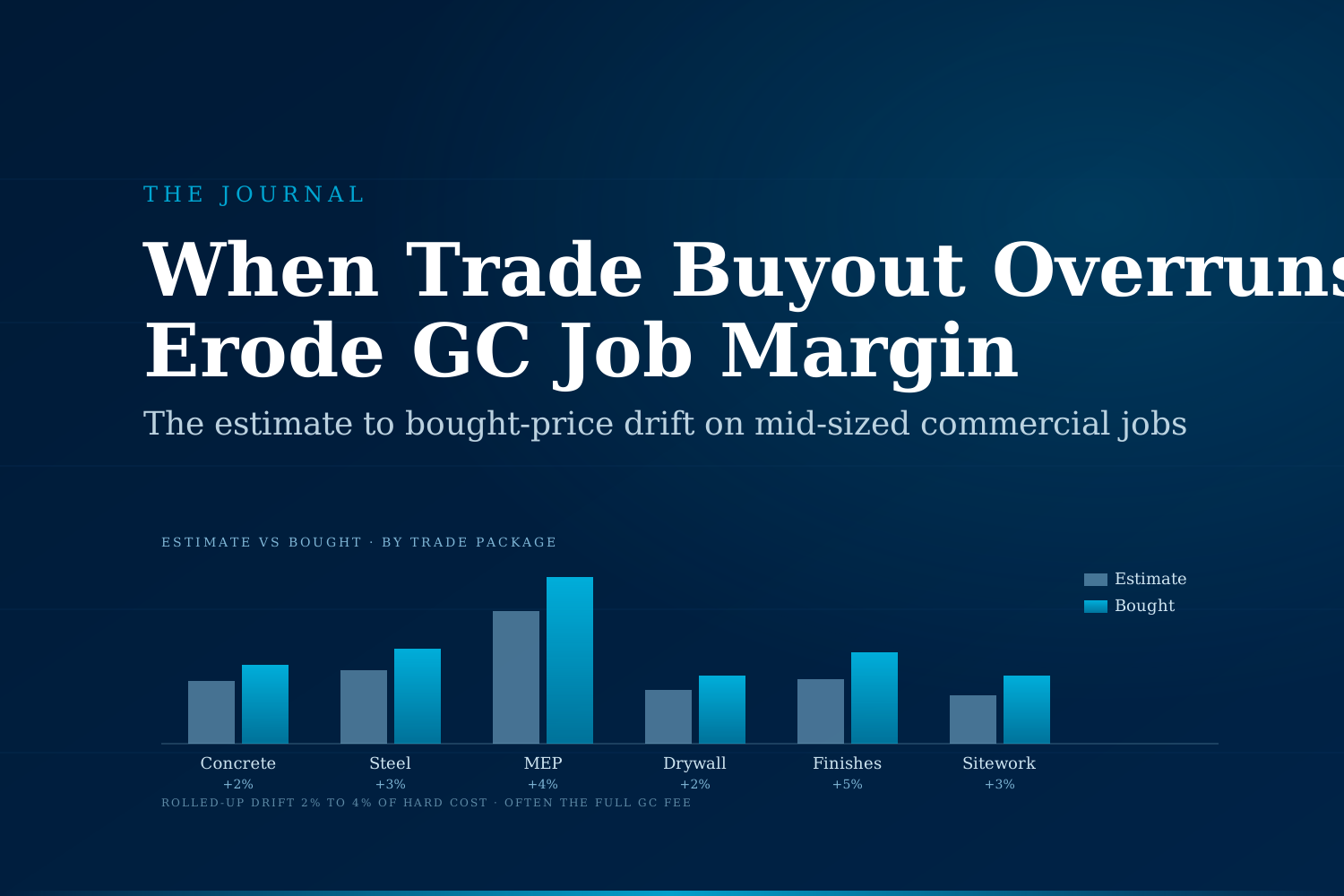
Trade buyout is the phase where a general contractor turns a signed contract's estimate into subcontracts and supplier orders. On mid-sized commercial jobs, the bought price often drifts two to five percent above the estimate. That delta almost always eats into GC fee. Here is where the drift shows up and what an AI-assisted process changes.
What is trade buyout on a GC job?
Buyout is the interval between winning a project and locking in each trade package. During this window, the estimator's numbers get replaced by signed subcontracts, real material POs, and confirmed supplier holds. On mid-sized commercial work, buyout runs four to twelve weeks depending on project size and the number of divisions of work.
The buyout phase is where an estimate turns into an obligation. Once a subcontract is signed, the price is locked. Before the subcontract is signed, the estimate is still aspirational. Most GC executive teams treat the estimate as the plan of record, but the plan of record moves during buyout, one signed sub at a time.
Why do buyout overruns happen?
A handful of recurring drivers show up on nearly every mid-sized job.
The estimator to PM handoff
Estimators bid a project with the best information available at bid time, which is often incomplete drawings, unclear finish selections, and no confirmed schedule. The project manager inherits the file and negotiates live sub prices against a snapshot that is already weeks old. Prices move in that window, and the PM works from a target that no longer reflects the market.
Time between bid and buyout
On mid-sized commercial work, the interval between bid submission and construction start is often 60 to 120 days. Material indices move. Sub backlogs shift. A drywall sub who bid at forty-two dollars per square foot in April may hold the line, price up, or requote at a higher number once the schedule is confirmed. Industry benchmarking from the Associated General Contractors of America has repeatedly flagged material and labor cost volatility as a top-tier risk factor for mid-sized commercial GCs, and buyout is exactly where that volatility lands.
Sub-scope drift in the proposal
Bid-time sub proposals often exclude items the PM later realizes are needed. Concrete pumping, temporary heat, dumpsters, hoist time, cleanup labor: inclusions vary sub to sub. During buyout the PM has to either negotiate the sub into a scope that matches the estimator's basis, or absorb the missing scope inside GC contingency. Absorbing is usually the path of least resistance and the highest long-term cost.
Owner clarifications during preconstruction
Owner-side clarifications during buyout, like a swapped finish, an extended warranty, or an added equipment pad, often carry a soft price impact that never gets a formal change order. It gets folded into the buyout price, the sub takes the extra scope for a modest add, and the estimator's basis never catches up.
Escalation on locked-in materials
Steel, copper, HVAC equipment, and switchgear prices swing on ninety-day cycles. If the estimator locked in a mid-range price and buyout hits at a higher point in the cycle, the difference lives inside the GC's fee unless the owner contract has an escalation clause. Most private-owner contracts under fifteen million dollars do not.
How big is the drift on a typical mid-sized job?
The pattern below is what mid-sized commercial GCs report in internal buyout reviews and post-mortems. Numbers are illustrative and vary by market, but the shape is consistent across geography and project type.
Buyout drift by division type on a hypothetical eight million dollar commercial project:
| Trade package | Estimate share | Typical buyout drift | Dollar impact |
|---|---|---|---|
| Concrete (structural and flatwork) | 12% | 1 to 3% | $10K to $29K |
| Steel and joists | 9% | 2 to 4% | $14K to $29K |
| MEP (mechanical, electrical, plumbing) | 28% | 2 to 5% | $45K to $112K |
| Drywall and framing | 8% | 1 to 3% | $6K to $19K |
| Finishes (flooring, paint, tile) | 7% | 3 to 6% | $17K to $34K |
| Sitework | 6% | 2 to 5% | $10K to $24K |
| Rolled-up buyout drift | 2 to 4% of hard cost | $150K to $300K |
On an eight million dollar job, that rolled-up drift often represents the entire GC fee on a lean bid. Nothing has been built yet.
Where does the recovered margin come from?
When buyout drifts, the money has to come from somewhere. In practice PMs pull from a few different places:
- GC contingency. The single largest pot. Contingency is priced into the estimate to cover exactly this kind of drift. When it drains before the schedule midpoint, the PM has no cushion left for the real surprises that show up during construction.
- Cost code shuffling. Overruns on one code get charged against another that came in under budget. This helps the job report cleanly at the monthly review and hides the buyout pattern from the executive team.
- Value engineering that clips scope. Late-stage VE, like swapping a specified finish for a cheaper equivalent or downsizing a mechanical package, is often driven by buyout overrun, not by owner request. The owner gets a lower-tier finish and does not always know why.
- Fee erosion. When contingency runs out and there is nothing left to VE, the GC eats the delta out of fee. This is the most common landing spot for the last one to two percent.
- Change order retro-fitting. Some PMs re-package part of the buyout drift as an owner change when a legitimate scope change is nearby. This works occasionally, and burns owner trust the rest of the time.
What changes when AI supports the buyout process?
The typical mid-sized GC runs buyout on a spreadsheet, a folder of leveled bids from the estimator, and a set of sub proposals scattered across email threads. The PM works division by division, comparing sub numbers, negotiating scope, and updating the buyout log by hand. On an eight million dollar job with twenty-two trade packages, that adds up to three to six weeks of PM attention on top of the rest of preconstruction.
An AI-supported buyout process shifts a few specific things without replacing the PM's judgment:
- Automatic scope-difference reads. Sub proposal PDFs get parsed and compared against the estimator's scope narrative. Missing inclusions and unusual exclusions surface before the PM opens the file, so negotiation starts from the real gap rather than the assumed one.
- Live material index tracking. Cost-code lines tied to indexed materials get flagged when the index moves past the estimator's basis and the sub has not yet been contracted. The PM sees the exposure while there is still time to negotiate a hold or lock a price.
- Buyout log reconciliation. Each awarded subcontract auto-updates a master buyout log with delta versus estimate, running contingency draw, and division-level status. Executives see the running position without waiting for the weekly export.
- Escalation memory. When a sub requotes forty-five days after the initial bid, the system notes the requote against the original number, the market movement in between, and the sub's usual pattern. The PM negotiates from data instead of memory.
- Signal back to the estimator. The next bid this same estimator writes benefits from a closed-loop record of how the last one bought out. Divisions that consistently drift high get priced with a more realistic basis on future work.
None of this replaces the PM. It gives the PM a clean read on where drift is coming from and how much runway is left in contingency, which is what most PMs would build for themselves if they had the time.
Signs your buyout process is bleeding margin
Three observations mid-sized GCs tend to use when deciding whether their buyout process needs help:
- Contingency draw curve peaks before the schedule midpoint. If the burn line hits fifty percent draw before the job is fifty percent complete, buyout drift is the likely cause, not construction surprises.
- PMs consistently negotiate the same excluded scope items across every job. If temporary heat, dumpsters, and cleanup labor show up as exclusions on nearly every sub proposal and get absorbed each time, the estimator's basis is not tracking with reality.
- The buyout log lives in one PM's inbox. If the executive team sees buyout results only at the monthly job review or at closeout, drift is not being managed. It is being observed after the fact.
Buyout is the least glamorous phase of a construction job and one of the most consequential. It sits between the estimator's optimism and the project manager's reality, and the gap between those two lands on GC fee more often than any other line item.
For a mid-sized GC running six to twenty concurrent jobs, the compound annual cost of a two percent buyout drift on hard cost easily crosses seven figures. Most of that pattern is knowable in advance. Some of it is fixable with the right operating rhythm and the right visibility into the buyout log.
If your buyout log lives on one PM's laptop and the executive team sees the delta only at closeout, we run a completely free automation audit aimed exactly at this cycle. No slide deck, no obligation. → Book the audit
Sami Raza
Software Developer & Technical Author
Sami Raza builds AI automation for logistics, DTC, and construction operations teams at ApexifyLabs, and writes about the operational failures that automation is actually worth pointing at.