Long-Lead Procurement Slippage on Mid-Size GC Schedules
When switchgear, air handlers, or generators slip a few weeks, the cost lands on the GC. How mid-size shops catch procurement slippage earlier with AI-augmented logs.
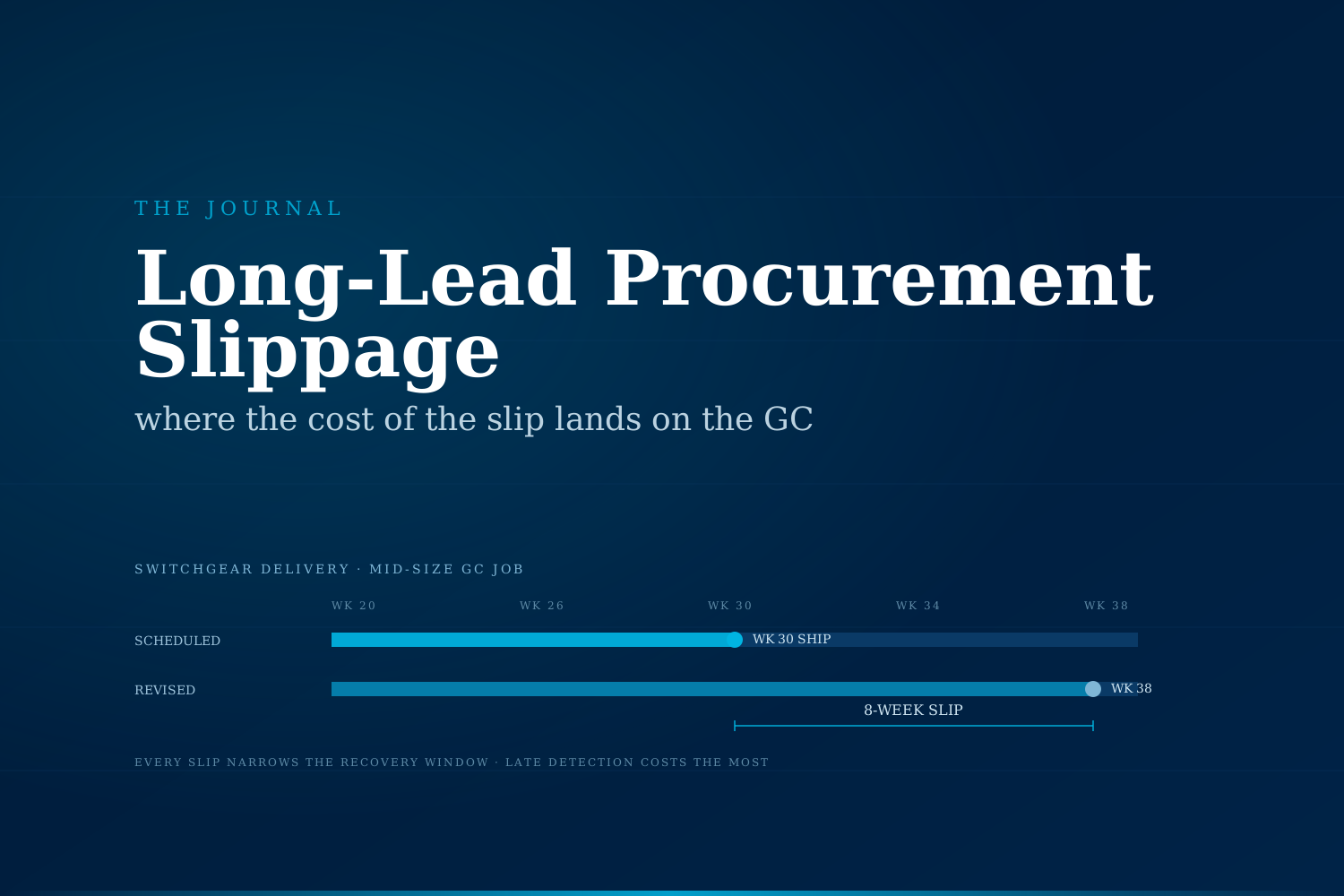
Long-lead procurement slippage is the gap between when a GC plans for electrical gear, HVAC equipment, or specialty doors to land on site and when they actually arrive. On mid-size jobs, a four to six week slip can erase schedule float, push substantial completion, and trigger liquidated damages tied to the owner contract.
This article looks at why long-lead slippage is still a structural problem in 2026, where the cost actually shows up on a mid-size GC's P&L, and what changes when AI watches the procurement log instead of a project engineer with a spreadsheet.
Why are long-lead items still slipping in 2026?
The post-2022 supply shock cooled, but the lead time profile did not return to pre-pandemic norms. Industry trackers like Dodge Construction Network and ENR's quarterly equipment surveys have continued to flag electrical switchgear, chillers, and rooftop units as the categories most likely to slip a quoted delivery date by two to twelve weeks. AGC's supply chain pulse surveys describe a similar pattern across mechanical and electrical packages.
For a mid-size GC running ten to fifteen active projects, that volatility shows up everywhere at once. Procurement logs that worked when a switchgear order took 16 weeks no longer give the project manager enough warning when the same order takes 40+ weeks and the manufacturer revises the ship date twice during the build. The information exists. It just rarely travels fast enough to act on.
What does long-lead slippage actually cost a GC?
The visible cost is the schedule extension. The deeper costs sit underneath it.
- Liquidated damages. Owner contracts on commercial work typically attach LDs ranging from a few thousand to tens of thousands of dollars per day past substantial completion. AGC counsel guidance and standard ConsensusDocs templates leave little room to claim relief once the slip is documented as a procurement issue rather than an unforeseen condition.
- Idle crew time. When the rooftop unit lands four weeks late, the mechanical sub's crew is either re-sequenced, paid stand-by, or lost to another job. Re-mobilization later in the schedule rarely costs nothing.
- General conditions burn. Site supervision, trailers, dumpsters, and project management time keep running. CFMA's annual margin survey consistently shows general conditions as one of the single biggest variables on whether a job lands at its as-bid margin.
- Owner relationship. Mid-size GCs win repeat work on trust. A late delivery the owner finds out about two weeks before its real impact looks like a different problem than the same delivery the GC flagged ninety days earlier with a recovery plan attached.
The numbers vary by job. The structure is consistent. The cost of a slip almost always lands on the GC's side of the table.
How do most procurement logs work today?
On many mid-size GC jobs, the long-lead log lives in a shared spreadsheet that the project engineer updates once a week from a mix of vendor emails, sub correspondence, and the occasional phone call. The submittal log feeds it. The buyout schedule feeds it. The owner pay application sometimes contradicts it. Nobody fully trusts the date in column F.
That is the baseline most mid-size shops are operating from. It works when supply chains are calm and lead times are predictable. It strains when neither is true.
What changes when AI watches the procurement log?
Picture the same log, but the project engineer is no longer the bottleneck for keeping it accurate. Vendor confirmations, ship notifications, freight tracking, and submittal returns flow into a single source of truth that updates itself. When a date slips, the system flags it, ties the slip back to the affected schedule activities, and surfaces the downstream impact before the next OAC meeting.
The project engineer's job shifts from data entry to judgment. The PM gets a current picture without chasing it. The superintendent finds out about a slip while there is still time to re-sequence rather than scramble.
Manual vs AI-augmented procurement tracking
| Dimension | Manual log | AI-augmented log |
|---|---|---|
| Update cadence | Weekly batch from emails | Continuous from vendor and freight data |
| Slip detection | When project engineer notices | When the source data changes |
| Schedule impact analysis | After the slip is confirmed | At the moment the date shifts |
| OAC meeting prep | Hours of reconciliation | Current view available on demand |
| PM time on procurement | 4 to 8 hours per week per job | Under 1 hour per week per job |
| Recovery window | Days to weeks | Weeks to months |
| Owner communication | Reactive after the impact | Proactive with options |
Notice what the table does not promise. AI does not move steel faster, does not negotiate with the manufacturer, and does not change the LD clause. It changes when the GC knows, which changes what the GC can still do about it.
What does the recovery window look like in practice?
Take a 200,000 square foot office tenant build with substantial completion set for week 48. Switchgear is scheduled to arrive at week 30, energization at week 33, mechanical commissioning at week 36. The manufacturer reissues a ship date moving the gear from week 30 to week 38.
In the manual flow, the project engineer sees the email on Tuesday and updates the log on Friday. The PM sees the updated log the following Monday. The superintendent finds out at the foremen's meeting on Wednesday. By the time the slip becomes a real conversation, ten to twelve calendar days are gone, and the recovery options have narrowed from "expedite, swap, or partial delivery" to "expedite or extend."
In the AI-augmented flow, the slip surfaces inside an hour, the schedule tie is automatic, and the PM has a working set of options for the owner before the original ship date even arrives. Same slip, different decision space.
Where the cost of inaction compounds
A single slip on a single job rarely sinks a GC. The compounding pattern is what hurts.
- Late detection turns into late mitigation.
- Late mitigation turns into change orders that get priced under pressure.
- Pressured change orders feed disputes that drag into closeout.
- Disputed closeout delays retention release, which strains the GC's working capital.
- Strained working capital limits how aggressively the GC can bid the next round.
CFMA working capital surveys consistently rank slow retention release among the top cash flow stressors for mid-size GCs. Long-lead procurement slippage is not the only contributor, but it sits upstream of several of them, which makes it one of the cleaner levers to pull.
When should a GC start thinking about this?
If your jobs include any of the following, the math tends to favor looking at procurement tracking before the next bid cycle, not after.
- Electrical switchgear, generators, or transformer rooms on the critical path.
- Engineered HVAC equipment with submittal-to-delivery windows over 20 weeks.
- Owner contracts with LD clauses above $5,000 per day.
- More than eight active projects with overlapping long-lead items.
- A buyout strategy that depends on early release of long-lead packages.
The tighter any of those constraints get, the more value sits in catching a slip earlier in the week instead of later.
A note on what AI does not solve here
It does not replace the relationship with the manufacturer's rep. It does not eliminate the need for a senior PM who knows which subs can absorb a re-sequence. It does not write the recovery narrative for the owner. What it does is buy the team the time to do all of that well, instead of doing it under deadline.
That is the actual transformation. Not fewer slips. Earlier knowledge of the slips that do happen, and a procurement picture the whole team trusts.
Where this lands for a GC thinking it through
Long-lead procurement is one of those workflows that looks routine until the day it does not. The shops that get hurt are rarely the ones that ignore it. They are the ones who trusted last quarter's lead times, missed the revision, and lost the recovery window before anyone noticed.
We run a completely free automation audit for mid-size GCs that want a second opinion on where their procurement log is leaking signal. No commitment, no slide deck, no upsell. → Book the audit
Sami Raza
Software Developer & Technical Author
Sami Raza builds AI automation for logistics, DTC, and construction operations teams at ApexifyLabs, and writes about the operational failures that automation is actually worth pointing at.