Carrier No-Show Re-Coverage on Spot Brokerage Desks
When a booked carrier no-shows on a spot load, the re-coverage clock is the most expensive workflow on the desk. Where the cost stacks and what an AI-managed layer changes.
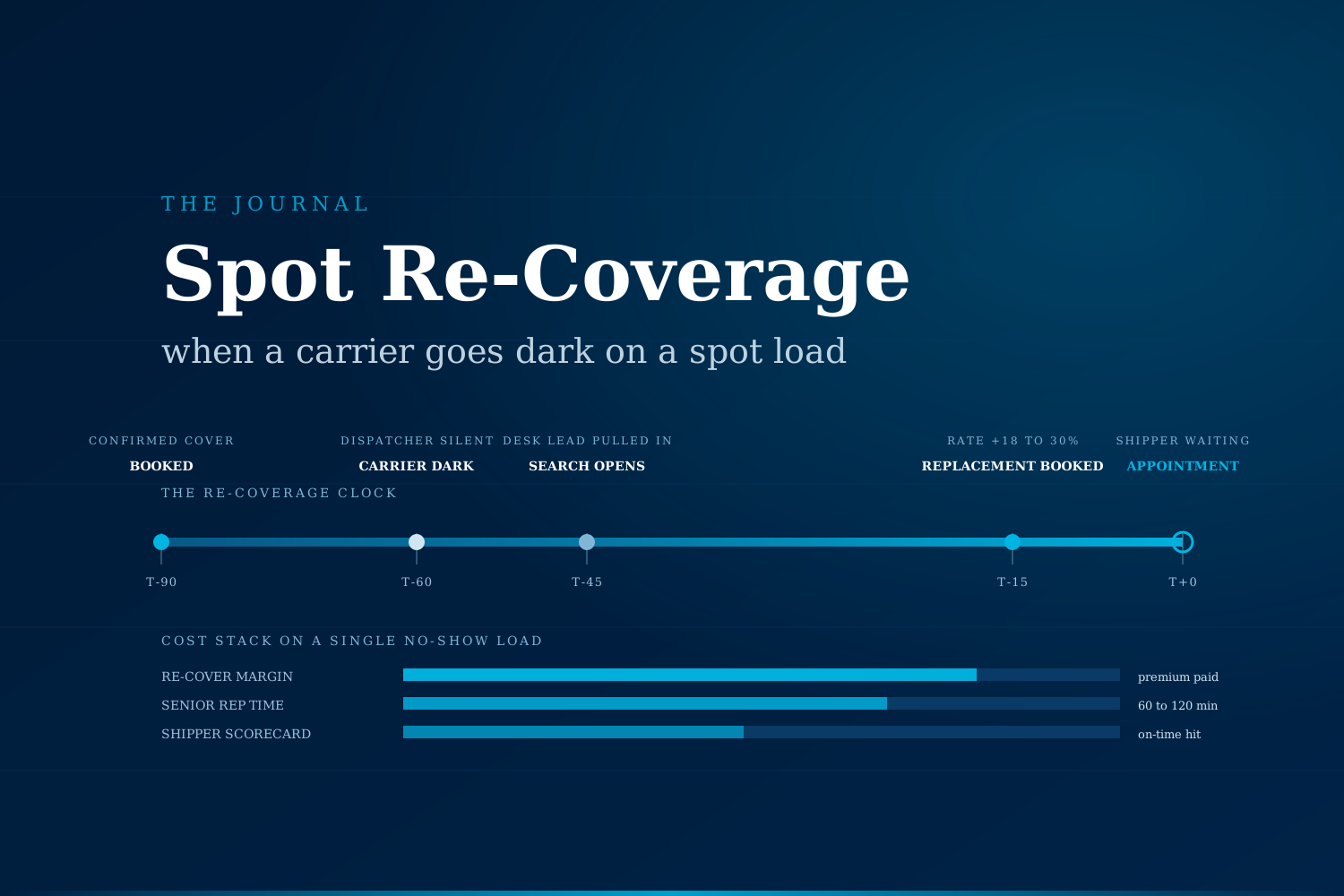
When a booked carrier no-shows on a spot load, the brokerage absorbs the full cost of finding a replacement at zero notice. The re-coverage cycle that follows is the most expensive workflow on a spot desk, and the one operators most often misprice. The fix is structural, not effort-based.
This article looks at what a no-show actually costs across margin, shipper scorecards, and senior rep time, why the recovery cycle is structurally harder than a normal cover, and what shifts when an AI-managed layer holds the re-coverage moment for the brokerage.
What is a carrier no-show on a spot load?
A no-show is when a carrier that confirmed a spot booking, sometimes hours in advance, fails to arrive at the shipper for the agreed appointment. The truck never shows, the dispatcher stops responding, or the load is rejected too late to find a substitute on the original schedule.
It is different from a regular cancellation. A cancellation gives the brokerage time to re-cover under normal market conditions. A no-show forces the desk into emergency mode against a clock that is already running, often during the worst spot rates of the day.
Why does no-show recovery hurt margin more than it should?
Three forces converge at once the minute a no-show is confirmed.
The replacement market is at its worst. Spot rates climb fastest in the final hours before an appointment, and DAT and Truckstop both publish hourly load-to-truck ratios that show that late-window spike on outbound lanes (DAT and Truckstop spot rate analytics, ongoing). A broker re-covering inside that window pays a premium that often eats the gross margin on the original booking.
The shipper relationship absorbs the second hit. A late delivery against a tendered appointment is a tracked KPI for most large shippers, and many use those tallies in the next routing-guide review. The brokerage that re-covers late takes the on-time hit even when the cause was a carrier, not the broker.
The desk itself burns through the third cost. Re-coverage pulls the highest-paid people on the floor into the lowest-leverage activity, calling carriers cold while ignoring the rest of the day's pipeline. The Transportation Intermediaries Association has flagged carrier risk management as one of the recurring margin drains in mid-size brokerages, with no-show events sitting near the top of the list (TIA carrier risk surveys).
What does a no-show day look like on a typical spot desk?
The pattern is almost identical across brokerages with very different tooling.
- An hour before pickup, the carrier dispatcher stops returning calls. The broker assumes a routine delay and waits another forty minutes.
- The covering rep starts calling the next-best carriers on the lane. Most are already loaded for the day. The few that are available quote rates 18 to 30 percent above the original cover, because the dispatcher knows the broker is now against the clock (Truckstop and DAT spot rate trend reports).
- The replacement is booked at a margin loss. The shipper is told of a delay, often with a generic explanation that the original carrier had a breakdown, even when the actual cause was unclear.
- The desk lead logs the no-show in a spreadsheet that nobody reads later, and the same carrier shows up on another covered load a few weeks on.
The full cycle takes 60 to 120 minutes of a senior rep's day and produces a single load that either lost money or barely broke even.
Manual versus AI-augmented re-coverage on a spot desk
| Step | Manual re-coverage today | AI-augmented re-coverage |
|---|---|---|
| Detection | Rep notices a missed check-in call, often 30+ minutes late | Silent-carrier signal fires the moment a scheduled check-in is missed, with shipper appointment context attached |
| Triage | Rep guesses whether this is a delay or a true no-show | System scores likelihood from carrier history, dispatcher response time, geofence ping, and lane behavior |
| Carrier search | Manual phone tree of top-of-mind carriers | Ranked list pulled from prior cover history on the lane, capacity board pings, and posted truck data, scored on probability to cover at the target rate |
| Outreach | Sequential dial-and-leave-voicemail | Parallel multi-channel outreach (call, SMS, load board, EDI 990 response) with auto-confirmation when the first acceptance lands |
| Margin discipline | Rep negotiates against the clock, accepts the first available cover | Bids are evaluated against a target re-cover ceiling, with escalation to the desk lead only when the ceiling is crossed |
| Shipper update | Manually drafted email or call, often delayed | Templated update with current ETA and reason code fires inside the same minute as the re-cover |
| Carrier learning loop | No-show goes into a spreadsheet | Carrier reliability score is updated automatically and the carrier is gated from premium lanes until human review |
The structural difference is not faster phone calls. It is detecting the no-show earlier, narrowing the carrier search faster, and protecting the desk lead's time so the rest of the day's coverage does not also slip.
What three signals say no-show recovery is taxing the desk?
A brokerage running its numbers honestly will usually see at least one of these patterns when no-show recovery is dragging the margin line.
- The lane-level margin distribution on spot loads shows a long tail of breakeven or negative covers that all trace back to last-minute re-covers, even though the desk's median margin looks healthy.
- The on-time delivery rate against routing-guide commitments is slipping in a way the carrier scorecards alone do not explain, because the misses are concentrated on a small number of no-show events that pull the percentages down.
- The senior reps' calendars show a recurring afternoon block of re-coverage activity that crowds out new quoting, leaving the next day's pipeline cold by the close of business.
The tighter those signals are, the more likely the desk is paying a structural cost on a workflow that nobody currently owns end to end.
What changes when an AI-managed layer handles re-coverage?
The interesting outcome is not a brokerage that never sees a no-show. Carriers will break down, dispatchers will go dark, drivers will reroute on their own. The change is in what the desk does the minute the carrier goes dark, and how cleanly the replacement is in motion before the shipper notices.
A managed layer at the re-coverage moment does three things that no single rep currently owns end to end.
At the detection step, it watches scheduled check-in calls, geofence pings, and dispatcher response time, and surfaces a probable no-show inside the first missed minute rather than the first missed hour.
At the cover step, it ranks the next-best carriers by likelihood to accept at the brokerage's target rate ceiling, then runs multi-channel outreach in parallel so the first acceptance lands the load without a senior rep working a phone tree.
At the shipper step, it sends a templated update with the current ETA and a reason code the moment the re-cover is confirmed, so the routing-guide scorecard reflects the brokerage's response, not the carrier's failure.
That is the change. Not a no-show-free pipeline. A pipeline that knows, for every no-show, who failed, how fast the replacement was found, what the re-cover cost, and what that carrier's score now looks like for the next time the lane comes up.
What this does not solve
It does not pick the brokerage's lanes, set the target re-cover ceiling, or write the policy on which carriers get gated after a single no-show. Those remain commercial calls. What it does is take the policy the brokerage has already written for how a no-show should be handled, and enforce it consistently across every desk, every lane, and every shift, so the cost the brokerage believed it was paying is the cost the brokerage actually pays.
Where this leaves a brokerage thinking it through
No-show re-coverage is one of those workflows that looks routine at a single load and material across a quarter of spot covers. The brokerages that get hurt the worst are rarely the ones with no carrier discipline. They are the ones that scaled spot volume, lane count, and shipper roster in parallel without closing the loop on what happens in the first minute a carrier goes dark.
We run a completely free automation audit for spot brokerages that want a clear read on what their no-show events are actually costing across re-cover margin, shipper scorecards, and senior rep time. No commitment, no slide deck, no upsell. → Book the audit
Sami Raza
Software Developer & Technical Author
Sami Raza builds AI automation for logistics, DTC, and construction operations teams at ApexifyLabs, and writes about the operational failures that automation is actually worth pointing at.