The Annual Lane RFP Crunch on Mid-Size Brokerages
Annual lane RFPs are the highest-leverage bidding cycle a freight brokerage runs. Manual response capacity often caps how many wins it can actually book.
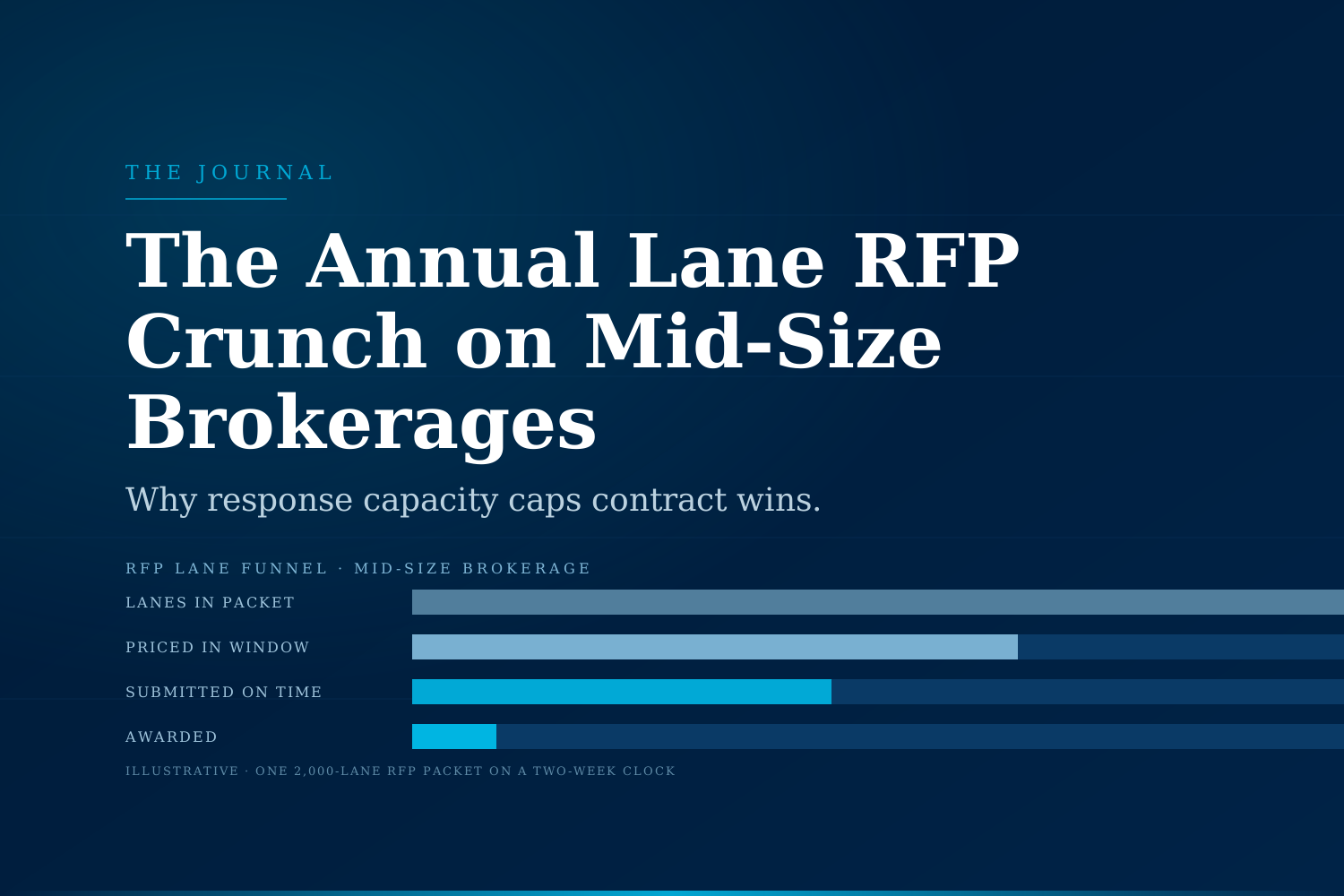
Annual lane RFPs are the largest concentrated bidding cycle a freight brokerage runs. A mid-size brokerage may field 50 to 200 shipper RFPs a year, each carrying thousands of lanes and a two-week response window. Manual response capacity is the hidden ceiling on contract growth.
That ceiling does not show up on a P&L. It shows up in the lane packets the pricing desk never opened, the bids that went in at the deadline with rough numbers, and the lanes that were left blank because nobody had time to build a rate. By the time awards come back, the math is already decided.
What is a lane RFP, and why does it matter for mid-size brokerages?
A lane RFP is the formal bidding cycle a shipper runs to assign 12-month contract awards across their lane network. For a mid-cap manufacturer or retailer, a single RFP can list 300 to 5,000 origin-destination pairs, with target volumes, equipment types, and accessorial expectations attached to each. The brokerage's response is a unit rate per lane, often with a fuel separation and a service commitment.
The win rate on those lanes determines next year's contract revenue. According to TIA and broader industry analyst commentary, brokerages typically convert single-digit to low-double-digit percentages of submitted RFP lanes into actual awards, and the rest fall to incumbents or lower bidders. The leverage on the cycle is real. The constraint is rarely strategy. It is how many lanes the pricing desk can credibly price in the window.
Where does the annual lane RFP cycle actually break?
The pricing analyst becomes the bottleneck
In most mid-size brokerages, lane pricing is a two- to four-person specialist function. Each lane gets a rate pulled from historical performance, blended with current DAT spot and contract data, adjusted for fuel and seasonality, and reconciled against carrier availability. A skilled analyst can credibly price somewhere between 50 and 150 lanes a day, depending on data quality.
A 2,000-lane packet from a single shipper, on a two-week clock, is already at the edge of what a small pricing team can absorb without cutting corners. When three of those packets arrive in the same month, the cuts start: bulk copy of last year's number, blanket fuel assumptions, lanes left at the default minimum. None of those decisions is unreasonable on its own. All of them compound.
Lanes get answered late, or not at all
DAT iQ's market commentary has long noted the spread between contract and spot rates can move 10 to 20 percent across a single quarter on volatile lane families. When a brokerage submits late, market direction has often moved against the rate they would have priced on day one. When a brokerage submits blank or default lanes, the shipper's routing guide treats those as non-bids and skips past them on awards.
A repeated observation across TIA and FreightWaves coverage of bid season is that mid-size brokerages tend to respond to fewer total RFPs than their largest competitors not because they lack pricing skill, but because their response throughput is bounded. They are leaving wins on the table at the intake step, well upstream of any pricing decision.
Pricing logic drifts from market
The other quiet break in the cycle is that pricing logic, on a manual desk, drifts within a single RFP. The first 100 lanes get priced with care. The last 200 get priced under deadline pressure. The pricing analyst remembers, hopefully, to update the fuel separation table. The analyst does not always remember that the carrier base on a specific lane family thinned out in March. Lanes that should have been bid up get bid down, and the brokerage either wins money-losing freight or loses lanes it should have won.
How big is the leakage on the contract book?
A practical sketch. A mid-size brokerage doing $80M to $150M in annual revenue might field 80 shipper RFPs in a calendar year, of which it credibly responds to only 50. Across the 30 packets it does not fully engage, a conservative read on lost award value, using broker contract win rates of 8 to 15 percent and average lane revenue of $30K to $80K, sits in the low seven figures. That is structural revenue, not opportunistic spot freight, and it is forgone before pricing strategy even enters the conversation.
The same back-of-envelope on a desk that doubles its response throughput, with no improvement in win rate, changes the math by a meaningful multiple. The model is not exotic. It is the same brokerage, bidding into more opportunities, applying the same pricing IP evenly across the book.
Manual vs AI-augmented lane RFP responses, side by side
| Dimension | Manual RFP desk | AI-augmented RFP desk |
|---|---|---|
| Lanes credibly priced per analyst-day | 50 to 150 | 500 to 2,000+ (first-pass) |
| Response window utilization | Final 48 hours dominated by data entry | First 7 days dominated by review and strategy |
| Pricing inputs | Memory plus spreadsheet pulls | Historical performance, DAT and contract data, carrier base depth, and seasonality, joined into one view |
| Lanes left blank or defaulted | Common on packets above 1,500 lanes | Rare; surfaced as exceptions for human review |
| RFPs declined for capacity reasons | Routine in peak bid season | Uncommon |
| Win-loss feedback loop | Post-award debrief, often months late | Model-side win probability available pre-submission |
The table reads like a productivity gain. It is also a strategy unlock. A desk that responds to twice as many RFPs at the same staffing is not just busier. It is bidding into a different market because its options are wider.
What changes when models do the lane-by-lane pricing legwork
Stripped to the operational truth, an AI-augmented RFP desk does not replace the pricing analyst. It removes the lane-by-lane data hunt that currently consumes the bulk of the analyst's day during bid season. Industry practitioner panels and brokerage operations surveys consistently note that the lanes which actually need genuine analyst judgment, the strategic ones with relationship stakes or unusual equipment, are a minority of any RFP. The rest are pricing exercises with a defensible model output.
When that majority is handled by a model with the analyst reviewing exceptions, three things change. The analyst spends their time on the strategic lanes. The brokerage responds to more RFPs in the window, on time, with consistent logic. And the brokerage has, for the first time, an honest pre-submission read on which lanes are likely to win and at what margin. The pricing conversation shifts from gut check to a portfolio decision.
Where the line stays: what we do not give to the model
This is not a story about handing pricing strategy to a black box. Lanes that touch a key relationship, that involve new equipment commitments, that fall in a market the carrier base is leaving, those still belong to a human. The art is in deciding which lanes need that judgment, and an AI-augmented desk creates the time and the data to make that call deliberately rather than under deadline pressure. The strategic IP of the brokerage, the relationships, the carrier network, the lane intelligence, does not move. The clerical drag on those assets does.
Three signs your brokerage is losing RFP wins before the bid hits
- Your team declines RFPs in bid season. Capacity-based RFP triage means the brokerage is choosing which shippers to engage based on desk hours, not strategy.
- Late-cycle lanes default to last year plus a percentage. When the last 200 lanes of a packet share a single default, the brokerage is bidding noise.
- Award analysis happens months after the awards. A win-loss read that arrives in Q2 is too late to change Q4's RFP response. The desk needs that read live, not on a delay.
If two of those signs fit, the RFP cycle is the place to look first.
A free audit of your RFP desk
A completely free automation audit looks specifically at how your brokerage runs the lane RFP cycle: where the response window breaks, which lane families default, and how much award revenue is sitting upstream of pricing logic. No slide deck, no commitment. We map the desk and tell you what we see.
Sami Raza
Software Developer & Technical Author
Sami Raza builds AI automation for logistics, DTC, and construction operations teams at ApexifyLabs, and writes about the operational failures that automation is actually worth pointing at.